
Surfaces Stripped Clean of Bonded Contaminants
Paint Decontamination & Wax in Fort Myers for vehicles exposed to industrial fallout, brake dust, and environmental grime
Bonded contaminants including brake dust, industrial fallout, tree sap, bug residue, and road grime embed into automotive paint through heat, time, and chemical adhesion, creating rough surfaces that hand washing cannot eliminate. Driven by Shine performs exterior detailing that removes these contaminants using a complete process: hand washing to remove loose dirt, iron remover application to dissolve ferrous particles, clay bar treatment to mechanically lift embedded contamination, paint decontamination to restore smooth surfaces, and protective wax or sealant application to shield treated paint. This service addresses vehicles that feel gritty to the touch despite regular washing or show orange-brown staining from brake dust oxidation on light-colored paint.
Decontamination restores smooth paint surfaces that allow water to sheet off cleanly rather than clinging to rough contamination, improves gloss by removing particles that scatter light instead of reflecting it uniformly, and prepares paint for protective products that bond poorly to contaminated surfaces. The process prevents long-term damage by eliminating acidic contaminants like bug residue and tree sap that etch clear coat when left untreated.
Schedule an exterior decontamination service to remove bonded contamination that standard washing leaves behind.
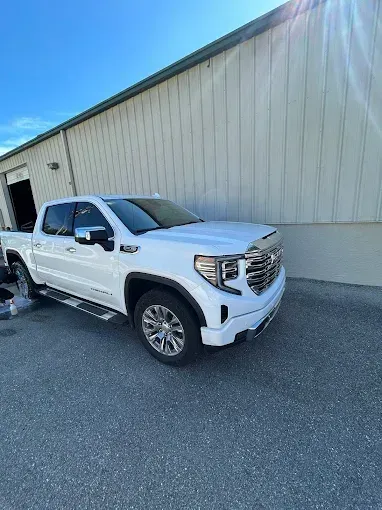
Why Routine Decontamination Extends Paint Life Throughout Florida's Climate
Iron removers dissolve ferrous brake dust particles through chemical reaction, turning purple as they lift contamination that appears as embedded orange specks on white or light-colored paint. Clay bar treatment uses a malleable resin compound that glides across lubricated paint to mechanically grab and remove particles bonded to the clear coat, leaving behind a glass-smooth surface. Protective wax or sealant application fills microscopic surface irregularities and creates a sacrificial barrier layer that contaminants bond to instead of directly attacking the clear coat.
After decontamination and wax application, paint feels completely smooth when you run your hand across it rather than rough or textured from embedded particles. Water beads tightly and rolls off treated surfaces instead of spreading flat and leaving mineral deposits as it evaporates. Gloss increases noticeably because light reflects uniformly off the smooth, clean surface instead of scattering across contamination. The protective layer slows how quickly new contaminants bond, extending time between necessary decontamination sessions.
Florida's combination of salt air, high humidity, intense UV exposure, and elevated temperatures accelerates paint degradation by promoting oxidation and allowing contaminants to bond more aggressively. Routine decontamination every three to four months removes these threats before they cause permanent etching or oxidation, preserving original paint condition and delaying the need for correction or repainting.
Common Questions About This Service
Vehicle owners preparing for exterior decontamination typically ask about clay bar safety, contamination sources, and appropriate service frequency.
What contaminants does clay bar treatment remove that washing does not?
Clay bar removes industrial fallout, rail dust, brake dust particles, tree sap, tar, paint overspray, and oxidized metal contamination that bond chemically or mechanically to the clear coat. Standard washing removes loose dirt and water-soluble grime but cannot dislodge particles embedded into the paint surface through heat or chemical adhesion.
How do you know when paint needs decontamination rather than just washing?
Run your hand across the paint after washing—if the surface feels rough, textured, or gritty instead of glass-smooth, bonded contamination remains. Visual indicators include orange or brown specks on light paint, black spotting that does not rinse away, or a dull appearance despite clean surfaces.
Why does brake dust contamination appear more heavily on front wheels?
Front brakes handle most braking force and generate more heat and friction, producing significantly more brake dust than rear brakes. This dust contains ferrous metal particles that oxidize on contact with moisture and bond to paint, wheels, and surrounding panels through heat and chemical reaction.
What is the purpose of applying wax after decontamination?
Wax creates a protective barrier that contaminants bond to instead of directly attaching to the clear coat, making future contamination easier to remove during washing. It also fills microscopic surface imperfections to improve gloss and provides temporary UV protection that slows oxidation between decontamination services.
How often should decontamination be performed on vehicles in Charlotte County?
Vehicles driven regularly in Fort Myers typically require decontamination every three to four months due to accelerated contamination from salt air, construction dust, agricultural overspray, and elevated temperatures that cause contaminants to bond more aggressively to paint surfaces.
Driven by Shine evaluates paint condition to determine whether standard decontamination is sufficient or if additional iron remover treatment is necessary for heavily contaminated surfaces. Request an exterior evaluation to receive a service recommendation based on your vehicle's specific contamination level and exposure conditions.